The advice you read about home offices was mostly written for people who don't have kids. The advice you actually need is operational, not aesthetic — which corner of the house can hold a door, which times of day you have real focus available, and how the rest of the household understands the boundary.
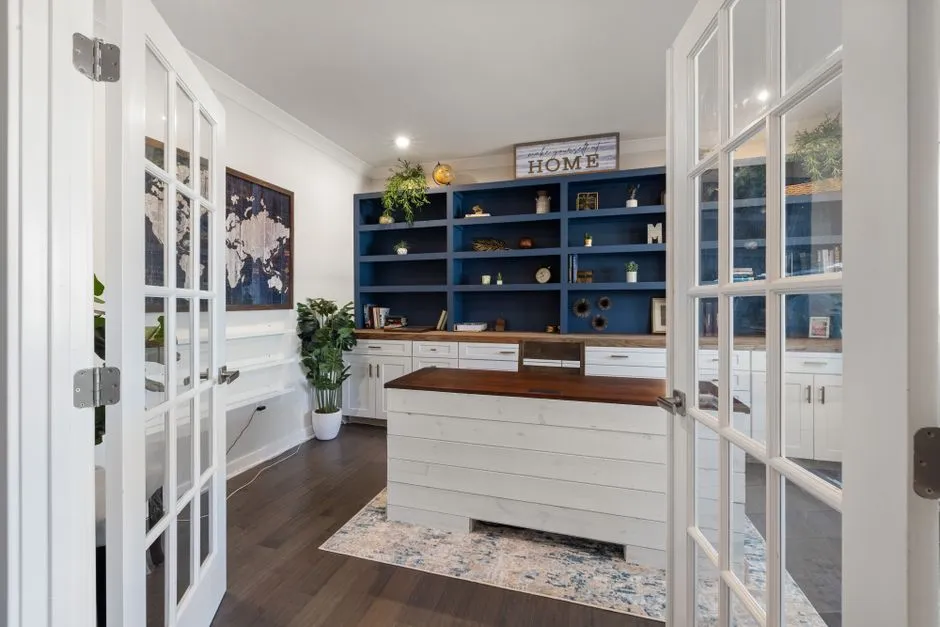
The door is the most important thing
Of all the home-office investments you can make, a door that closes is by far the most consequential. It can be a converted closet, a basement corner with a curtain, or a shed in the yard. The exact location matters less than the binary fact of being closeable. The door is what allows the rest of the household to learn the boundary — open door means available, closed door means do not enter unless something is on fire.
If your house structurally cannot give you a door, the next-best option is the bedroom door of a kid who is at school or daycare during your work hours. Their bed becomes your back-up desk. This is not glamorous, but it works.
Sound isolation and headphones
Noise-cancelling over-ear headphones (Sony XM5 or Bose QC are the consensus picks at the time of writing) are the second-most-impactful purchase. They cut household noise enough to allow real focus, and they're a visible signal to anyone who walks in — headphones on means heads-down. The cheaper bone-conduction headphones some parents prefer have the opposite signal because they don't look like work; that's a feature for some people and a bug for others, depending on your household dynamic.
The schedule signaling system
For households with children old enough to read or recognize symbols, a simple stoplight system on the office door works remarkably well. Red: only knock if it's blood, fire, or an actual emergency. Yellow: I'm working but you can come in for a non-urgent reason. Green: door's open, come in. The green periods are short and deliberate. The red periods are calendar-aligned with your meeting blocks. The kids learn the system in about a week, and after that, they self-regulate.
Equipment that actually matters
An external monitor (you'll work in 90-minute blocks more comfortably). A real chair (back pain compounds; spend the money). A solid headset with a mic (matters more than camera quality for credibility on calls). A standing desk option (the second hour of any focused block goes better standing). Beyond these, most "home office" gear is decoration. Don't optimize the aesthetic before you've optimized the door.
Ready to find a flexible role?
Browse our full job board or jump straight to categories that fit your background. Every listing has been filtered for remote-first, async-friendly companies that respect caregiving commitments.